Genweglobal

We help with informative content to help your day go by faster. We cover the issues GenZ faces in this tough world Love, family, finances, and much more.Join the movement!

  • Genweglobal

    November 26, 2025

    One-Time
    Monthly
    Yearly

    Make a one-time donation

    Make a monthly donation

    Make a yearly donation

    Choose an amount

    $5.00
    $15.00
    $100.00
    $5.00
    $15.00
    $100.00
    $5.00
    $15.00
    $100.00

    Or enter a custom amount

    $

    Your contribution is appreciated.

    Your contribution is appreciated.

    Your contribution is appreciated.

    DonateDonate monthlyDonate yearly


    Introduction

    Welcome back, students. If you’ve mastered unlocking and navigating your smartphone, you’re ready for today’s lesson: communication. Phones were first created for conversation, and although smartphones have evolved, that purpose remains at their core. Today’s class focuses on calling, texting, and using your phone’s voice commands to make communication faster and easier.

    Whether you want to reconnect with an old friend or quickly find out tomorrow’s weather, your smartphone can handle it—all you need is a bit of practice.


    Step 1: Making Phone Calls

    Let’s begin with what smartphones have always done best—making phone calls. Tap the green phone icon on your home screen to open the calling app. Depending on your phone, you’ll see tabs such as Recents, Contacts, and Keypad.

    To call someone already saved in your contacts, simply tap Contacts, scroll through the list, and touch the name of the person you want to reach. Then, tap the phone symbol to dial. When the call connects, raise the phone gently to your ear or tap the speaker option if you prefer hands-free talking.

    If you’d like to dial a number manually, tap Keypad and enter the number just as you did on older landlines. Press the green call button to begin. Remember—you’re always in control. If something doesn’t feel right, press the red end button to hang up.


    Step 2: Sending Text Messages

    Texting may feel unfamiliar at first, but it’s simply written conversation. Start by tapping the messages icon—usually shaped like a speech bubble. Here, you can open existing conversations or start a new one by pressing the plus sign.

    When creating a new text, choose a contact or type in a phone number. Then tap the message box to reveal your digital keyboard. You can tap each letter lightly with your fingertip to spell out words. Mistyped something? The backspace key erases it, and predictive text often guesses your next word to help you type faster.

    When your message is ready, press Send. You’ll see a small checkmark or bubble appear when the message is delivered. Short messages, like “How are you?” or “Call me later,” are perfect for getting started. Over time, you can add emojis, pictures, or even voice recordings.


    Step 3: Using Voice Assistants

    Now that you know the basics of calling and texting, let’s add some fun to technology through voice commands. Smartphones now include digital helpers—Siri on iPhones and Google Assistant on Androids—that can follow spoken instructions.

    To activate your assistant, say “Hey Siri” or “Ok Google,” depending on your phone. You can then ask questions or give commands:

    • “Call John.”
    • “Send a text to Anna saying I’ll be there soon.”
    • “What time is it in London?”
    • “Set a reminder for my doctor’s appointment.”

    Voice assistants simplify tasks you might struggle to do manually. If typing or navigating small icons feels tricky, this feature helps you stay independent.


    Step 4: Practicing Daily Communication

    Now that you’ve learned calling, texting, and voice commands, practice is key. Try making one call and sending one text each day. Say good morning to your daughter, or check in with a friend. You’ll gain speed and confidence in just a few days.

    You may make a few mistakes along the way—and that’s fine. The more comfortable you become, the more you’ll discover your own rhythm. Technology is meant to serve you, not stress you.


    Step 5: Staying Connected and Confident

    Smartphones open up countless ways to stay in touch beyond traditional communication. Once you feel confident with calls and texting, explore apps such as WhatsApp, Messenger, or FaceTime for video chats. These work similarly but add the bonus of seeing your loved ones face-to-face.

    As you explore, keep experimenting. Ask questions, repeat steps, and allow yourself to grow comfortable with digital conversation. Confidence is not built overnight—it’s built through consistent use.


    Conclusion

    Today’s session taught you more than just phone features—it taught you how to connect. You now know how to make calls, send texts, and command your smartphone with your voice. More importantly, you’ve discovered that technology isn’t just for the young; it’s a tool for anyone willing to learn.

    Your next goal is consistency. Use your smartphone daily, communicate often, and try one new feature each week. Before long, your smartphone will feel less like a stranger and more like a good friend ready to help you every day.

    Genweglobal

    Why Rappers and Athletes Lash Out – The Pressure of Being “The Man” Young

    The journey of young rappers and athletes reflects the hidden pressures of sudden success. Overnight fame transforms them into providers for their families, leading to emotional struggles and unrealistic expectations. Training often neglects mental health, resulting in explosive behaviors. A cultural shift is needed to prioritize boundaries, mental support, and healthy coping strategies.

  • Genweglobal

    November 25, 2025

    One-Time
    Monthly
    Yearly

    Make a one-time donation

    Make a monthly donation

    Make a yearly donation

    Choose an amount

    $5.00
    $15.00
    $100.00
    $5.00
    $15.00
    $100.00
    $5.00
    $15.00
    $100.00

    Or enter a custom amount

    $

    Your contribution is appreciated.

    Your contribution is appreciated.

    Your contribution is appreciated.

    DonateDonate monthlyDonate yearly

    Genweglobal

    There was a time when television defined how people connected with one another. It wasn’t just entertainment; it was cultural glue. Families gathered at set hours to watch shows that shaped generations. From sitcoms to dramas, television built shared experiences and gave people a sense of belonging.
    Now, those shared moments are rare. Instead, individuals stare down at their phones, scrolling endlessly through videos, posts, and trends. Television once built culture; smartphones fragmented it.

    The Era of Appointment Television

    Before the on-demand revolution, television taught patience. Viewers had to wait for episodes, discuss cliffhangers, and anticipate the outcome together. That waiting created emotional investment. You didn’t just consume stories—you lived in their rhythm.

    Shows had time to breathe. Writers explored character development, moral dilemmas, and slow emotional growth. Think of the long arcs in series like The Wire or The Sopranos. Television forced audiences to sit still and think.

    Contrast that with modern media consumption. Phones deliver constant novelty—seconds-long videos designed to capture attention instantly. The storyline disappears, replaced by stimulation. Algorithms know what to feed next, ensuring users stay hooked without necessarily staying fulfilled.

    The Algorithmic Replacement of Imagination

    Television depended on the creativity of writers and directors. It held an unspoken agreement with audiences: “Give us your attention, and we’ll give you meaning.” Smartphones made a different deal: “Give us your time, and we’ll give you distraction.”
    Short-form content flattened the narrative structure that once defined powerful storytelling. There’s no beginning, middle, or end anymore—only a loop of reaction.

    Stories shaped who people aspired to be. Heroes and villains acted as moral compasses. Weekly episodes encouraged self-reflection, empathy, and curiosity. Today’s algorithmic media does the opposite; it reinforces preferences. The story doesn’t challenge you—it conforms to you.

    The Death of Shared Moments

    When people say “TV was better,” they don’t mean the technology was superior. They miss the human connection it created. Everyone watched the same finale. Strangers could talk about the same characters. The conversation belonged to millions, not just personal timelines.

    Phones, on the other hand, promote isolation under the disguise of interaction. People scroll “together” but experience completely different realities shaped by personalized feeds. A friend may spend the night laughing at memes while another dives into political outrage. The cultural overlap vanishes.

    As a result, society loses coherence. No central story connects people. Humanity becomes a mosaic of micro-interests and filtered perceptions.

    From Storytelling to Self-Branding

    Television produced storytellers. Social media produced performers. The difference is critical. Storytellers shared experiences that mirrored the audience’s heart; performers create moments to harvest attention.

    Television asked for respect—it required creators to meet certain standards before reaching millions. Today, the barrier is gone. Anyone can become a broadcaster, which empowers creativity but also floods the world with noise. Attention is diluted, and narrative craft becomes optional.

    The culture of self-branding further drives this shift. People now view their lives as continuous broadcasts. Instead of escaping into stories, they create personas. The question isn’t “What am I watching?” but “Who’s watching me?”

    What Phones Changed About the Brain

    It’s not just habits that have shifted—it’s cognition itself. Studies show that smartphones shorten attention spans and weaken memory retention. Television, too, could be addictive, but it worked in longer cycles. Viewers processed complex plots and built long-term memory associations.

    Phones operate differently. Notifications fragment engagement, training the brain to chase freshness. This constant interruption prevents narrative thinking—the same kind that helps us set goals, build empathy, and plan future selves.

    So when people say today’s stories feel empty, it’s often because they’re not stories at all—they’re flashes of unrelated content competing for the same cognitive real estate that used to hold serial dramas and character arcs.

    Are We Addicted to Screens or the Feeling of Control?

    Smartphones feed the illusion of power. Users can switch content instantly, decide what to consume, and scroll endlessly until something feels right. But that choice comes with a paradox: unlimited access removes meaning. When everything is available, nothing feels special.

    Television’s structure gave direction. You couldn’t fast-forward live broadcasts or filter ads easily. That lack of control created focus, and focus created immersion. Ironically, limitation fueled emotional depth. Smartphones removed boundaries—and along with them, emotional texture.

    What Can Be Reclaimed

    Television culture taught patience, discussion, and empathy. Those values don’t have to disappear. The challenge is reintroducing narrative thinking into digital life. That means choosing long-form content, supporting thoughtful creators, and fighting back against algorithmic passivity.

    Watching isn’t inherently bad; unintentional watching is. Choosing deliberate stories restores imagination. The real addiction isn’t to technology—it’s to convenience. And convenience, when unchecked, kills progress.

    The remedy isn’t to destroy smartphones but to reintroduce storytelling discipline. We can rebuild that collective focus one meaningful narrative at a time.


    10 Million Dollars vs. Friendship for Life –

    The blog discusses a dilemma between choosing $10 million or retaining lifelong loyal friends, emphasizing the deeper value of relationships over wealth. It highlights how money can’t replace genuine connections that provide emotional support, joy, and shared experiences. Ultimately, true happiness stems from meaningful friendships, not just financial success.

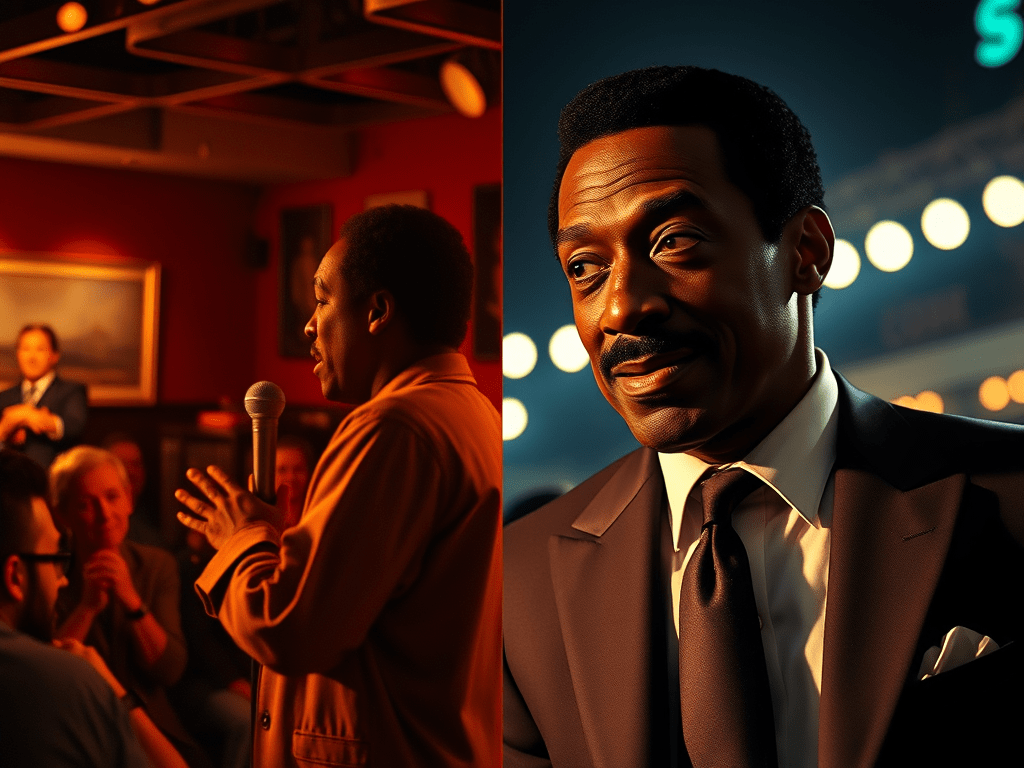
    Eddie Murphy: The Art of Staying Relevant –

    Eddie Murphy has maintained his relevance in comedy for over three decades by evolving his craft and making strategic choices in his career. His journey from stand-up to iconic film roles demonstrates adaptability, creativity, and a focus on personal growth, offering valuable lessons on sustaining success and avoiding burnout.

    Dave Chappelle: Morals Over Money –

    December 5, 2025 The Day Dave Chappelle Said No There are moments in culture that stop people in their tracks, and one of them was when Dave Chappelle walked away from a reported $50 million deal at the height of his TV fame. At a time when most people would have doubled down on money…

  • Genweglobal

    November 24, 2025

    One-Time
    Monthly
    Yearly

    Make a one-time donation

    Make a monthly donation

    Make a yearly donation

    Choose an amount

    $5.00
    $15.00
    $100.00
    $5.00
    $15.00
    $100.00
    $5.00
    $15.00
    $100.00

    Or enter a custom amount

    $

    Your contribution is appreciated.

    Your contribution is appreciated.

    Your contribution is appreciated.

    DonateDonate monthlyDonate yearly

    Genweglobal

    Somewhere between cable TV and infinite scrolling, art became content. The distinction may sound small, but it defines the modern age of storytelling. Once, entertainment existed to move the imagination. Now, it exists to sustain attention.

    The entire structure of media consumption has shifted from narrative satisfaction to data optimization. What matters is not how good something is, but how well it performs. Creativity, once a human act of expression, is now an algorithmic target.

    When Engagement Replaced Creativity

    In the past, creative work aimed to entertain and enlighten. It introduced audiences to perspectives they hadn’t experienced before. Today, entertainment rarely takes that risk. The industry has optimized its processes to produce engagement instead of emotion.

    Engagement, in digital culture, means measurable reaction—likes, comments, shares, arguments. These metrics form the new definition of success. The effect is clear: artists and media outlets prioritize reactionability over originality. It’s safer to mimic what works than to invent something unfamiliar.

    The Power of Predictability

    Predictability guarantees performance. Every sequel, remake, and reboot proves this strategy works. Familiarity reduces financial risk while preserving audience comfort. When a story succeeds once, the system milks it repeatedly until exhaustion.

    Streaming platforms scale this logic infinitely. Their recommendation algorithms push content that mirrors what users already consume. The feedback loop transforms preference into confinement. You don’t explore entertainment anymore—the algorithm explores you.

    The Outrage Formula

    Controversy provides the perfect shortcut to engagement because it triggers instant emotion. Media producers understand this intuitively. News outlets and influencers design narratives that provoke anger or disbelief because those emotions keep audiences interacting.

    A cycle forms: outrage leads to clicks, clicks lead to profit, profit funds more outrage. Over time, cultural conversation reshapes itself around conflict. Storytelling becomes less about truth and more about friction.

    This formula applies to every domain, from music and film to social discourse. The internet rewards the loudest voices, not the most meaningful ones.

    The Cultural Cost of Repetition

    Every culture depends on stories to define values and identities. When stories become repetitive, values stagnate. Modern entertainment reflects this stagnation through endless polarity—heroes vs. villains, us vs. them, trending vs. forgotten. The emotional landscapes remain consistent even when topics change.

    Audiences lose the ability to feel surprise or transformation, because entertainment no longer offers resolution—it offers continuation. Every discussion leads to another conflict, not conclusion. This psychological treadmill trains people to crave stimulation instead of growth.

    Why Nostalgia Sells

    Nostalgia is the safety net of a tired industry. When imagination dries up, the past provides instant familiarity. Reboots and remakes succeed precisely because they require minimal risk. They activate emotional memories already established, saving creators from building new ones.

    However, nostalgia also dilutes cultural identity. When every new release references something old, generations lose their unique voice. The present becomes a remix of history that never evolves.

    Technology’s Invisible Editing Hand

    While creators carry the blame for repetition, the actual director of modern entertainment is the algorithm. Every platform measures engagement data to determine what gets amplified. This invisible feedback mechanism is shaping collective creativity without public awareness.

    The system learns that short outrage posts outperform essays, that reactive videos outperform reflective discussions, that controversy sustains longer session times. So, everything bends toward that outcome. The result is not art, but attention farming.

    The Audience’s Role in Decline

    Blaming technology alone ignores the audience’s complicity. Viewers choose what wins. Metrics reflect behavior, not morality. When people reward speed, shock, and familiarity, the system amplifies those traits. Each click is a vote for sameness.

    Consumers may claim they want originality, but their digital habits reward safety. The only way culture changes is when the audience begins valuing depth again—supporting creators who prioritize meaning over momentum.

    Can Entertainment Be Saved?

    Creativity is cyclical. Even in its decline, it carries seeds of renewal. Independent creators are already redefining the rules by rejecting algorithmic pressure. Podcasts, independent films, and long-form YouTube storytelling show that audiences still crave authenticity.

    Entertainment will survive, but it must remember its purpose: to cultivate curiosity, not conformity. When creators rediscover courage and audiences rediscover patience, the cycle will break. The next wave of culture will emerge not from trends, but from truth.


    Genweglobal

     Losing Friends on the Way Up – Eddie Murphy’s Rise to Stardom

    December 3, 2025 The Price of Royalty in Comedy Fame can be a tricky mirror — reflecting both brilliance and loneliness. Eddie Murphy’s story isn’t just about jokes and laughter. It’s about transformation, ambition, and the uncomfortable truth that success often comes with distance. Before Beverly Hills Cop, before Saturday Night Live stardom, Eddie was…

    How to Make Calls, Send Texts, and Use Voice Commands – Smartphone Skills for Older Adults

    This tutorial helps older adults become confident in smartphone communication. It covers making calls, sending texts, and using voice assistants like Siri and Google Assistant. With practice, users can improve their skills, explore additional apps, and communicate effectively. Technology is accessible to everyone willing to learn and practice regularly.

    Why TV Was Better – Are We Addicted to Screens Instead of Stories?

    The post discusses the cultural shift from television to smartphones, emphasizing how TV once fostered shared experiences and emotional investment through storytelling, which now contrasts with the fleeting, personalized content of mobile devices. This change has led to isolated interactions, reduced attention spans, and a loss of collective cultural coherence.

  • Genweglobal

    November 23, 2025

    One-Time
    Monthly
    Yearly

    Make a one-time donation

    Make a monthly donation

    Make a yearly donation

    Choose an amount

    $5.00
    $15.00
    $100.00
    $5.00
    $15.00
    $100.00
    $5.00
    $15.00
    $100.00

    Or enter a custom amount

    $

    Your contribution is appreciated.

    Your contribution is appreciated.

    Your contribution is appreciated.

    DonateDonate monthlyDonate yearly


    Introduction

    Welcome, students. Today’s class is all about transforming that mysterious little device in your hand into something familiar and friendly. Smartphones may look intimidating, but underneath the glass and icons, they are designed for your convenience. Think of this session as your introduction to the digital world, where you’ll learn to control your phone instead of letting it control you.

    This lesson focuses on the fundamentals: how to hold, unlock, and move through your smartphone’s screen. By the end, you’ll not only understand what those colorful icons mean but also begin to feel confident experimenting on your own.


    Step 1: Getting Comfortable with Your Phone

    Before jumping into the technical parts, let’s get physically comfortable with your smartphone. The device should rest naturally in your hand, like you would hold a small notebook. Locate the power button—it’s usually on the side or top. A brief press turns the screen on, and a longer press turns the phone off.

    When your phone wakes up, you’ll see a lock screen. This is the security gate that protects your data. You might unlock it with a PIN, a pattern, or a fingerprint. Follow the on-screen instructions to unlock it. Remember, patience is key. There’s no need to rush; phones respond better to calm, steady actions than abrupt ones.

    You’ve already taken your first digital step—turning on and unlocking your phone. This might seem simple, but it’s a powerful beginning.


    Step 2: Understanding the Home Screen

    Once your phone is unlocked, you arrive at the home screen—the main dashboard. This space holds icons representing all your apps, similar to a well-organized filing cabinet. You’ll notice a few essential icons pinned to the bottom: the phone, messages, and camera apps. These are your core communication tools.

    Each icon leads to a different function. Tap an icon once lightly with your fingertip to open it. Don’t press; smartphone screens are sensitive and only need a soft touch. If ever you want to return to the home screen, swipe upward or press the small circle or rectangle at the bottom of the screen, depending on your phone’s model. Think of the home button as your “safe place”—it always takes you back where you started.


    Step 3: Managing Your Screen and Volume Settings

    Your smartphone can adjust to your comfort level. If your screen looks too dim or the text seems small, swipe down from the top of your screen. A menu will appear called the “Control Panel” or “Quick Settings.” Here you can slide your finger along the brightness bar to make the display brighter or dimmer.

    Next, look for the sound icon. This lets you raise or lower the volume for calls, apps, and notifications. Adjust to a level that feels right for you. Over time, you’ll learn to rely on these controls daily.

    Technology adapts to you, not the other way around. Small customizations can make learning smoother and more enjoyable.


    Step 4: Exploring Safe Navigation

    Every smartphone has built-in ways to move backward, forward, or switch between apps. For example, many Android phones have three buttons at the bottom: one for going back, one for returning home, and one for viewing open apps. iPhones rely more on swiping motions, such as swiping up from the bottom to go home.

    The more you explore, the faster you’ll learn. Try opening your messages, then your photos, and return to the home screen each time. This muscle memory builds confidence. Mistakes won’t break your phone—exploration is how you learn its logic.


    Step 5: Building Confidence Over Time

    Learning to use a smartphone is like learning any new skill—repetition builds familiarity. Spend just ten minutes daily exploring your phone. Open apps, adjust settings, and try typing a few words.

    Treat your smartphone as a companion rather than a challenge. Once you’ve mastered these basics, you’ll be ready to make calls, send messages, and even browse the internet safely.


    Conclusion

    Today’s lesson taught you how to turn on, unlock, and navigate your smartphone’s home screen while adjusting your settings to fit your comfort. Remember, technology rewards patience and curiosity. Mastering your smartphone starts with understanding it one feature at a time.

    Your next step? Practice—and explore. The more time you invest, the more confident and capable you become.

    Genweglobal

    The Entertainment Reboot – How We Traded Art for Engagement

    Modern entertainment has shifted from creative storytelling to engagement-driven content, prioritizing metrics over originality. Algorithms amplify familiar themes and controversial narratives, fostering stagnation and predictability. This results in a cultural reliance on nostalgia and repetition, as audiences choose safety over depth. For renewal, both creators and viewers must embrace authenticity and meaningful exploration.

     Mastering the Basics of Your Smartphone – A Step-by-Step Guide for Older Learners

    This guide empowers older adults to confidently use smartphones. It covers unlocking, navigating home screens, and adjusting settings through easy-to-follow lessons. Students learn to control their devices, build comfort with touchscreens, and develop skills necessary for daily use, ultimately fostering a positive relationship with technology as they explore further.

    Entertainment Is Dead – Why Every Story Feels the Same

    Modern entertainment has become repetitive, prioritizing emotion and predictability over originality. The industry thrives on recycled narratives and manufactured controversies, reducing creativity to mere content. Audiences engage with familiar patterns, while nostalgia reigns. However, genuine change may arise as independent creators encourage a return to depth and meaningful storytelling.

  • Genweglobal

    November 22, 2025

    One-Time
    Monthly
    Yearly

    Make a one-time donation

    Make a monthly donation

    Make a yearly donation

    Choose an amount

    $5.00
    $15.00
    $100.00
    $5.00
    $15.00
    $100.00
    $5.00
    $15.00
    $100.00

    Or enter a custom amount

    $

    Your contribution is appreciated.

    Your contribution is appreciated.

    Your contribution is appreciated.

    DonateDonate monthlyDonate yearly

    Genweglobal

    Every week feels like déjà vu. The same scandals, the same controversies, the same outrage. A celebrity feud replaces a political meltdown, a social media debate replaces a world event, and somehow, the cycle feels perfectly synchronized. Entertainment today has become a loop—a self-repeating machine churning recycled narratives under brighter lights and louder headlines.

    But if every story now feels the same, it’s worth asking: is entertainment really dying, or has the concept of creativity simply been replaced by content?

    The Chaos Loop of Modern Media

    Scroll through your feed, and the pattern becomes almost hypnotic. Monday starts with a new celebrity breakup, Tuesday shifts into online outrage about gender politics, Wednesday births a meme, and by Friday, a new scandal distracts from the previous one. Next week, the same emotions reappear—anger, shock, laughter—all repackaged with new faces.

    This isn’t coincidence. It’s design. Modern entertainment thrives not on novelty, but on predictability. Platforms and media outlets understand that familiarity keeps viewers comfortable, even when they claim to crave change. Outrage and curiosity are finite emotions, yet easily renewable. The industry figured out how to turn them into fuel.

    Every headline is a rerun disguised as breaking news.

    The Business of Manufactured Virality

    Once upon a time, entertainment meant artistry. Stories were built to last, to say something that transcended their moment. Now, the “moment” is the art. Attention is the currency, and algorithms dictate the market.

    The structure of modern media rewards frequency over depth. A single viral clip has more value than a film that takes risks. Studios and platforms chase engagement metrics, not legacy. Why spend years creating originality when recycled controversy guarantees clicks?

    Creative stagnation isn’t accidental—it’s profitable. The controversies that flood timelines aren’t random; they’re part of a system that maximizes emotion over imagination. It’s not entertainment’s death we’re witnessing; it’s its commodification into emotional fast food.

    The Emotion Economy

    In today’s attention economy, emotion is the product, and outrage is the bestseller. This explains why every discussion seems preloaded with antagonism—gender wars, celebrity drama, public apologies, redemption arcs. The narrative is simple, repetitive, and dangerously effective.

    Each story has the same formula: conflict, division, public reaction, and resolution that never truly resolves. It’s a permanent loop of heightened emotion. People say they’re tired of it, but they never stop participating because emotional stimulation functions like reward.

    Entertainment used to provoke thought; now it provokes reaction. Stories today don’t develop meaning—they manufacture momentum.

    Nostalgia and the Search for Authenticity

    This cycle is one reason nostalgia dominates popular culture. Old TV shows are remade, classic songs are sampled, and sequels often replace original ideas. Audiences crave the authenticity missing from new creations. They long for stories with moral depth instead of algorithmic repetition.

    But nostalgia isn’t revival—it’s retreat. When every new story feels like a remix, audiences cling to the last era where creativity demanded effort. The entertainment industry doesn’t resist this; it monetizes it. Platforms repackage the comfort of the past because emotional predictability sells better than artistic risk.

    The result is cultural stagnation masked as innovation.

    Celebrity Culture as Self-Perpetuating Theater

    Celebrities now serve more as characters in an infinite performance than as artists. Their personal lives drive engagement in ways their art no longer can. Every controversy becomes an episodic cliffhanger. Fame today requires constant crisis management; it’s a storyline system where the audience participates as judge and jury.

    The media doesn’t just cover stories anymore—it writes them. The distinction between entertainment and reality has dissolved. Scandal, redemption, and rivalry form the modern script. Every new headline contributes to the same soap opera of Western media culture: endless noise pretending to be relevance.

    Technology’s Role in Homogenizing Culture

    Digital technology made creativity accessible but also uniform. The same sound filters, editing tools, and viral formats dominate every platform. Audiences no longer differentiate entertainment by art style, but by engagement potential. The creators adapt accordingly, shaping their vision to fit the algorithmic mold.

    This environment discourages experimentation because success depends on imitation. A trend emerges, thousands copy it, and originality becomes a liability. Even genuine ideas must camouflage themselves within the language of trends to be noticed.

    In this system, diversity of content gives way to uniformity of structure. Different artists tell the same story because the algorithm demands it.

    The Death of Mystery and Discovery

    Entertainment once thrived on curiosity. You had to search for hidden gems—to stumble upon music, film, or literature that felt personal. Now, discovery is outsourced to artificial intelligence. Recommendation engines select content that aligns with past behavior, ensuring users rarely encounter surprise.

    This automated feedback loop keeps people trapped within comfort zones. When discovery becomes predictable, mystery dies—and storytelling loses its magic.

    Why We Accept the Cycle

    So why doesn’t the audience revolt? Because the illusion of choice masks the lack of variety. Streaming services, social platforms, and entertainment news bombard users with quantity that feels like diversity. One million options, yet all structured the same.

    The psychological mechanism at work is called “the paradox of choice.” When faced with excess, people default to familiarity. And familiarity is the fuel of the cycle.

    The system works because boredom itself has become terrifying. People no longer tolerate silence or waiting. So they reach for the same stimulus disguised as new experience, perpetuating the very fatigue they complain about.

    What Comes After the Collapse

    Entertainment may be dying in its current form, but renewal is possible. Real change won’t come from studios or influencers—it will come from audiences reclaiming agency. When people demand depth instead of noise, innovation always follows.

    Independent creators, podcasts, and long-form storytellers already signal that shift. Audiences are beginning to rediscover patience. The next great entertainment revolution won’t be measured in likes or trends; it will be measured in the return of attention.

    Until then, the industry will keep replaying its own endings, hoping no one notices the screen flickering behind the spectacle.


    Genweglobal

    The Boondocks Was Right About Rappers – Why the Show Still Speaks Truth

    The Boondocks, initially dismissed as offensive, has proven its brilliance by challenging Black entertainment and hip-hop culture’s contradictions. Through sharp satire, it critiqued rapper authenticity and commercialization. Characters like Uncle Ruckus and Thugnificent exposed uncomfortable truths, making the show relevant in today’s landscape of performative identity, where exaggeration often masks reality.

    SNAP Benefits: Why Feeding People Matters More Than You Think

    The blog examines SNAP (food stamps) as a vital federal program supporting low-income individuals and families. It highlights its role in preventing crime, stabilizing households, and bolstering local economies. However, criticisms include dependency issues, stigma, and insufficient benefits. Ultimately, it advocates for understanding and reform to address food insecurity effectively.

    The Power of Partnership – Why Every Great Man Needs a Right-Hand Man

    Great leaders achieve success through strategic partnerships rather than solo endeavors. Historically, a “right-hand man” offers support, balance, and accountability to visionaries like Elon Musk and 50 Cent. This dynamic fosters collaboration essential for sustainable achievements, emphasizing that greatness thrives on teamwork, while fame often misrepresents true contributions.

  • Genweglobal

    November 21, 2025

    One-Time
    Monthly
    Yearly

    Make a one-time donation

    Make a monthly donation

    Make a yearly donation

    Choose an amount

    $5.00
    $15.00
    $100.00
    $5.00
    $15.00
    $100.00
    $5.00
    $15.00
    $100.00

    Or enter a custom amount

    $

    Your contribution is appreciated.

    Your contribution is appreciated.

    Your contribution is appreciated.

    DonateDonate monthlyDonate yearly


    Genweglobal

    When The Boondocks first aired, it was dismissed by some as offensive cartoon satire. But time proved the show’s brilliance. Beneath its exaggerated comedy was a sharp cultural mirror—one that dared to challenge the contradictions defining Black entertainment, hip-hop, and fame itself.

    Years later, its messages resonate stronger than ever. Music videos, influencer drama, and artist scandals all echo the absurdities the show once mocked. The truth is uncomfortable: The Boondocks didn’t exaggerate rappers; it predicted them.

    The Show That Said What Others Wouldn’t

    The Boondocks tackled the sacred institutions of hip-hop with ruthless honesty. It revealed the performative nature of street authenticity and the commercialization of rebellion. Creator Aaron McGruder didn’t hate rap culture; he loved it enough to hold it accountable.

    Characters like Thugnificent, Gangstalicious, and Riley Freeman were archetypes—exaggerated reflections of real attitudes in the music industry. They embodied insecurity masked as confidence, rebellion repackaged for profit, and masculinity tangled with performance.

    Every laugh the show produced carried a sting. It forced viewers to question what passes for authenticity in an industry built on image.

    Uncle Ruckus: The Absurd Truth-Teller

    At first, Uncle Ruckus seemed like a grotesque caricature—a self-hating racist spouting outrageous opinions. Yet, beneath the comedy lay unsettling relevance. His ignorance represented American denial, both within and outside the Black community.

    He wasn’t admirable, but he was honest. Ruckus spoke without filter, while others in the show hid behind social scripts. That rawness, in a world obsessed with image, became weirdly refreshing. Even in his wrongness, he forced reflection.

    This paradox makes him one of the show’s most memorable characters. He symbolizes how truth can disguise itself as madness when society refuses to face it directly.

    Rappers as Performers in a Cultural Theater

    In The Boondocks, rap wasn’t just music—it was mythology. Artists played exaggerated versions of themselves for fame and validation. The line between person and persona blurred to extinction.

    That’s still true today. Scroll through social media: rappers and influencers alike perform their identities as ongoing entertainment. Outrage becomes marketing. Pain becomes content. Even humility becomes performance.

    The irony is striking. What was once rebellion against the system has become a product within it. Hip-hop, once counterculture, is now corporate culture dressed in rebellion’s costume.

    The Psychology of Strange Behavior in Fame

    Rappers often appear strange because the environment rewards strangeness. Shock sells. Outrage mobilizes attention. The industry incentivizes eccentricity, even self-destruction. When every feed demands constant novelty, artists stretch themselves into absurdity to remain relevant.

    What The Boondocks foresaw was that exaggeration would become survival—the louder, flashier, and more controversial an artist became, the longer they stayed visible. The show recognized that modern entertainment doesn’t just accept contradiction; it depends on it.

    Comedy as Social Documentation

    McGruder’s use of humor wasn’t cruelty—it was preservation. Comedy allowed discussion of taboo truths without moral suffocation. The laughter disarmed people long enough to process uncomfortable realities about fame, race, and consumerism.

    Like great satire from Chappelle’s Show or South ParkThe Boondocks used exaggeration to expose normalization. It asked: How can a community claim empowerment through art while embracing stereotypes for profit?

    That question remains unanswered today.

    From Satire to Prophecy

    Look at today’s hip-hop scene, and you’ll see The Boondocks’ world realized. Artists feud for clicks more than respect. Lyrics often blend parody and sincerity. Fan loyalty sometimes looks like cult devotion. The satire blurred into reality.

    Even social media itself mirrors the show’s structure—a blend of sincerity and absurdity, activism and chaos. Just like The Boondocks, the internet makes performance look like truth.

    What We Can Still Learn

    The lesson isn’t anti-rap; it’s anti-facade. Authentic expression shouldn’t require caricature. The Boondocks reminded us that strength in culture comes not from exaggerating identity, but from examining it.

    Hip-hop remains one of the most powerful cultural forces on Earth. But power without reflection risks becoming parody. When artists mistake performance for purpose, creativity dies in self-replication.

    The show’s continued relevance lies in its courage to mock what people worship. It freed culture from denial and invited critique without apology. In doing so, it represented the essence of true art—fearless observation of uncomfortable truth.


    Genweglobal

     Why Do Men and Women Trust Men More? The Psychology Behind Loyalty and Comfort

    The post explores why both men and women often find trust more easily in male companionship. It discusses the simplicity and predictability in male interactions, contrasting it with the emotional complexity found in female friendships. The article emphasizes the need for both genders to understand and appreciate diverse communication styles to enhance trust and connection.

    “Why Jesse Lee Peterson Thinks Educated Women Make Terrible Wives…and Why He’d Probably Lecture My Grandma About It

    Jesse Lee Peterson, a polarizing preacher and radio host, claims educated women struggle as wives and mothers, arguing that careers detract from family roles. While some statistics support his views on maternal fatigue, many counterpoints highlight the benefits of educated mothers. Peterson’s humorous interview style sparks ongoing debates about gender and family norms.

    Let’s Rap About It: Why Dave East, Fabolous, Maino, and Jim Jones Are Built for Podcast Greatness

    “Let’s Rap About It” hosts Dave East, Fabolous, Maino, and Jim Jones explore authentic conversations in hip-hop, merging humor and real-life experiences. The show’s strong chemistry and candid discussions challenge industry norms, providing insights into their lives and culture, creating a captivating blend of storytelling, laughter, and authenticity that resonates with listeners.

  • Genweglobal

    November 20, 2025

    One-Time
    Monthly
    Yearly

    Make a one-time donation

    Make a monthly donation

    Make a yearly donation

    Choose an amount

    $5.00
    $15.00
    $100.00
    $5.00
    $15.00
    $100.00
    $5.00
    $15.00
    $100.00

    Or enter a custom amount

    $

    Your contribution is appreciated.

    Your contribution is appreciated.

    Your contribution is appreciated.

    DonateDonate monthlyDonate yearly

    Genweglobal

    Walk into any grocery store and you will see two Americas shopping side by side: the people paying with debit or credit cards, and the people quietly swiping EBT. The second group is using SNAP—the Supplemental Nutrition Assistance Program, commonly known as food stamps.

    Some see it as a lifeline. Others see it as a crutch. But here is one hard truth that often gets left out of the debate: if you do not feed the hungry, crime will rise. Food is not just nutrition; it is social stability. You feed people to keep them calm, to keep them human, and to keep neighborhoods from tipping into chaos.

    This blog takes a balanced, honest look at SNAP—why it is good, why it is bad, and why every working person should be less judgmental and more aware that most of us are only a few paychecks away from needing it.


    What Is SNAP, Really?

    SNAP is the largest federal nutrition assistance program in the United States. It gives low-income individuals and families a monthly benefit loaded onto an EBT card that works like a debit card at approved grocery stores, farmers markets, and some online retailers.

    The goal is simple on paper: reduce hunger and improve nutrition among people with low or no income. But in practice, SNAP does something bigger. It quietly holds together communities that are already stretched thin by low wages, rising rents, and unpredictable jobs.

    A few fast facts to frame the conversation:

    • Around 4040 million people receive SNAP in a typical year.
    • Nearly half of SNAP participants are children.
    • The average benefit is only a few dollars per person per day—not enough for luxury, just survival.
    • Most SNAP households have at least one worker; this is not just an “unemployed” program.

    SNAP is not some distant government idea; it is woven into the survival strategy of working-class America.


    The Good: How SNAP Benefits Actually Help

    1. Feeding People to Prevent Desperation and Crime

    Hungry people are not just “uncomfortable”—they are desperate. Desperation changes behavior. When people cannot feed their kids, they do not think about policy, they think about survival. That is where crime can enter the picture.

    Research has shown that when social safety nets like SNAP are cut, property crimes and even violent crimes can rise. Think about the logic: if there is no legal way to meet basic needs, illegal options start to look more attractive.

    Feeding people is not just charity; it is crime prevention. Filling a refrigerator can be cheaper for society than filling a jail cell.

    2. Stabilizing Families on the Edge

    SNAP is often portrayed as something “other people” use, but many households go in and out of the program as their situation changes. A job loss, medical emergency, divorce, or reduced hours can suddenly push a stable working family into food insecurity.

    SNAP acts like a shock absorber. It keeps families from crashing when life hits them with a financial pothole. It does not make people rich; it helps them stay afloat long enough to recover.

    3. Supporting the Working Poor

    One of the most misunderstood facts about SNAP: a large share of recipients work or recently worked. Many are:

    • Home health aides
    • Retail workers
    • Restaurant staff
    • Gig workers
    • Warehouse staff

    These are “essential workers” who literally keep the economy running, yet their wages often do not match rising housing, food, and transportation costs. SNAP fills the gap between low wages and high prices.

    So when people say, “I work, why should I help someone on SNAP?” the reality is: a lot of SNAP users are working right next to you.

    4. Boosting Local Economies

    Every SNAP dollar spent buys food from a local store, which pays employees, suppliers, truck drivers, and farmers. Economists estimate that each SNAP dollar can generate more than a dollar in economic activity.

    In other words, this is not money disappearing into a void. It moves through neighborhoods, especially in low-income areas where every grocery sale matters.


    The Bad: Real Problems and Tough Questions About SNAP

    SNAP is helpful—but it is not perfect. There are real criticisms and real frustrations that deserve attention.

    1. It Can Create a Sense of Dependency

    SNAP is designed as a temporary help for many, but for some people it becomes long-term. If wages never rise and costs never fall, people can feel locked into the system. That dependency is not always about laziness; often it is about structural problems like:

    • Underpaid jobs
    • No affordable childcare
    • No transportation to better jobs
    • High medical bills

    Still, the feeling of being dependent on the government can damage self-esteem and motivation. People may start to believe they will never get ahead, so they stop trying. That mental trap is one of the deepest long-term dangers.

    2. Stigma and Division Between “Taxpayers” and “Takers”

    SNAP has a public relations problem. Many people imagine fraud, abuse, and “free riders” whenever they hear “food stamps.” While fraud exists, it is a small fraction of the total program cost.

    The larger issue is stigma. The person using an EBT card in front of you might be:

    • A single parent working two jobs
    • A senior citizen with a tiny fixed income
    • Someone recently laid off after ten years at the same job

    But stigma turns them into a stereotype in the public eye. That division—“they are takers, I am a taxpayer”—tears at social trust and makes it harder to have honest discussions about how to fix the system.

    3. Benefits Often Do Not Match Real Costs

    SNAP benefits are calculated using formulas that do not always match what food actually costs in different cities. In places where rent, utilities, and groceries are high, the benefit can run out halfway through the month.

    So instead of solving hunger, SNAP sometimes just stretches it out: people may eat decently for two weeks, then struggle at the end of the month. It is a bandage on a deeper wound—wages that do not cover modern living costs.

    4. Complex Rules and Red Tape

    Applying for SNAP can be confusing, time-consuming, and emotionally draining. People deal with:

    • Long forms
    • Documentation requirements
    • Long waits
    • Fear of doing something wrong and getting accused of fraud

    For someone already juggling kids, work, and stress, the bureaucracy alone can push them to give up even when they qualify.


    The Hunger–Crime Connection: Why Food Is Public Safety

    Here is the blunt reality: hungry people do not stay calm. Hunger increases stress hormones, anxiety, anger, and hopelessness. Add that to poverty, unsafe neighborhoods, and no visible way out, and the mix can be volatile.

    When a community’s basic needs are not met, you do not just get quiet suffering—you can get:

    • More shoplifting and theft
    • More drug dealing and dangerous hustles
    • More violent confrontations born out of frustration

    Feeding people is not about “spoiling” them. It is about keeping the temperature of the community down. Full stomachs do not solve every problem, but they take the edge off enough for people to think more clearly and act less desperately.

    In that sense, SNAP is not just a social program; it is a stabilizing tool. The cost of feeding millions might look high until you compare it to the cost of:

    • Policing
    • Incarceration
    • Lost productivity
    • Emergency medical care related to violence and stress

    Society pays one way or another. Paying through food is often cheaper and more humane than paying through prisons.


    The Working Class Is Closer to SNAP Than It Thinks

    One of the cruel ironies in the SNAP debate is that many of the loudest critics are not as far from needing help as they believe. The modern working class often lives only a few paychecks—or even a few missed shifts—away from crisis.

    Consider:

    • A sudden medical bill can wipe out savings.
    • A car breaking down can mean losing a job.
    • A landlord raising rent by 200200 dollars can erase a fragile budget.

    Many “stable” workers are one layoff or illness away from applying for SNAP themselves. That should not be shameful. It should be a wake-up call.

    Instead of seeing SNAP users as “them,” it is more accurate to see them as “us on a bad day.” That shift in perspective can grow understanding and reduce harsh judgment.


    Interesting Facts About SNAP That Change the Conversation

    A few lesser-known details about the program help challenge common myths:

    • Most SNAP households with an able-bodied adult work within a year of receiving benefits.
    • Many SNAP recipients are children, seniors, and people with disabilities—groups with limited earning power.
    • SNAP fraud rates are relatively low compared to the size of the program; the majority of people use it as intended.
    • Benefits can only be used for food, not alcohol, cigarettes, or non-food items.
    • During economic downturns, SNAP automatically expands as more people qualify, acting like a built-in shock absorber for the economy.

    These facts do not mean the program is perfect, but they do show it is not the runaway free-for-all it is often portrayed to be.


    A Call for More Understanding—and Smarter Policy

    SNAP benefits live in a tension: they are both necessary and imperfect. They protect people from hunger, reduce desperation-driven crime, and support local economies. At the same time, they can create uncomfortable questions about dependency, cost, and design.

    The answer is not to blindly defend or blindly attack the program. The answer is to:

    • Acknowledge that everyone needs help at some point.
    • Recognize that feeding people is cheaper than policing desperation.
    • Push for better wages and lower barriers so fewer people need long-term SNAP.
    • Reduce the stigma so people can get temporary help without being publicly shamed.

    The next time you see someone using an EBT card, remember this: in a different twist of fate, that could be you. The working class is standing on uneven ground, and SNAP is one of the few nets below.

    If society wants fewer crimes, fewer broken families, and fewer people trapped in survival mode, then feeding people is not just kindness—it is strategy.

    From Small Start to Big Success: How to Launch a Profitable Toilet Tissue Business on a Budget

    The article outlines steps to launch a profitable toilet tissue business on a budget. It emphasizes the importance of a solid business plan, legal registration, and cost-effective machinery. By focusing on local markets, branding, and sustainable practices, entrepreneurs can maximize profits and ensure steady growth. Key advice includes managing expenses, building supplier relationships, and gradually…

    Coding the Future: How to Program an AI Robot to Predict Future News and Profit from It

    The blog outlines how to create an AI robot designed for predicting future news and identifying investment opportunities. It details essential steps including defining purpose, gathering data, choosing programming tools, and training models. Emphasizing ethical practices, the article concludes by discussing monetization strategies and underscores the importance of continuous testing and optimization for sustainable success…

    How to Start a Toilet Tissue Business and Maximize Profits

    Starting a toilet tissue business involves understanding the market, careful planning, and adhering to legal requirements. Steps include selecting a location, sourcing materials, acquiring machinery, hiring staff, and developing a strong brand. Effective marketing and distribution are crucial for success. Focus on sustainability and profit maximization through efficient management and strategic scaling to achieve long-term…