Genweglobal

November 22, 2025
Make a one-time donation
Make a monthly donation
Make a yearly donation
Choose an amount
Or enter a custom amount
Your contribution is appreciated.
Your contribution is appreciated.
Your contribution is appreciated.
DonateDonate monthlyDonate yearlyGenweglobal
Every week feels like déjà vu. The same scandals, the same controversies, the same outrage. A celebrity feud replaces a political meltdown, a social media debate replaces a world event, and somehow, the cycle feels perfectly synchronized. Entertainment today has become a loop—a self-repeating machine churning recycled narratives under brighter lights and louder headlines.
But if every story now feels the same, it’s worth asking: is entertainment really dying, or has the concept of creativity simply been replaced by content?
The Chaos Loop of Modern Media
Scroll through your feed, and the pattern becomes almost hypnotic. Monday starts with a new celebrity breakup, Tuesday shifts into online outrage about gender politics, Wednesday births a meme, and by Friday, a new scandal distracts from the previous one. Next week, the same emotions reappear—anger, shock, laughter—all repackaged with new faces.
This isn’t coincidence. It’s design. Modern entertainment thrives not on novelty, but on predictability. Platforms and media outlets understand that familiarity keeps viewers comfortable, even when they claim to crave change. Outrage and curiosity are finite emotions, yet easily renewable. The industry figured out how to turn them into fuel.
Every headline is a rerun disguised as breaking news.
The Business of Manufactured Virality
Once upon a time, entertainment meant artistry. Stories were built to last, to say something that transcended their moment. Now, the “moment” is the art. Attention is the currency, and algorithms dictate the market.
The structure of modern media rewards frequency over depth. A single viral clip has more value than a film that takes risks. Studios and platforms chase engagement metrics, not legacy. Why spend years creating originality when recycled controversy guarantees clicks?
Creative stagnation isn’t accidental—it’s profitable. The controversies that flood timelines aren’t random; they’re part of a system that maximizes emotion over imagination. It’s not entertainment’s death we’re witnessing; it’s its commodification into emotional fast food.
The Emotion Economy
In today’s attention economy, emotion is the product, and outrage is the bestseller. This explains why every discussion seems preloaded with antagonism—gender wars, celebrity drama, public apologies, redemption arcs. The narrative is simple, repetitive, and dangerously effective.
Each story has the same formula: conflict, division, public reaction, and resolution that never truly resolves. It’s a permanent loop of heightened emotion. People say they’re tired of it, but they never stop participating because emotional stimulation functions like reward.
Entertainment used to provoke thought; now it provokes reaction. Stories today don’t develop meaning—they manufacture momentum.
Nostalgia and the Search for Authenticity
This cycle is one reason nostalgia dominates popular culture. Old TV shows are remade, classic songs are sampled, and sequels often replace original ideas. Audiences crave the authenticity missing from new creations. They long for stories with moral depth instead of algorithmic repetition.
But nostalgia isn’t revival—it’s retreat. When every new story feels like a remix, audiences cling to the last era where creativity demanded effort. The entertainment industry doesn’t resist this; it monetizes it. Platforms repackage the comfort of the past because emotional predictability sells better than artistic risk.
The result is cultural stagnation masked as innovation.
Celebrity Culture as Self-Perpetuating Theater
Celebrities now serve more as characters in an infinite performance than as artists. Their personal lives drive engagement in ways their art no longer can. Every controversy becomes an episodic cliffhanger. Fame today requires constant crisis management; it’s a storyline system where the audience participates as judge and jury.
The media doesn’t just cover stories anymore—it writes them. The distinction between entertainment and reality has dissolved. Scandal, redemption, and rivalry form the modern script. Every new headline contributes to the same soap opera of Western media culture: endless noise pretending to be relevance.
Technology’s Role in Homogenizing Culture
Digital technology made creativity accessible but also uniform. The same sound filters, editing tools, and viral formats dominate every platform. Audiences no longer differentiate entertainment by art style, but by engagement potential. The creators adapt accordingly, shaping their vision to fit the algorithmic mold.
This environment discourages experimentation because success depends on imitation. A trend emerges, thousands copy it, and originality becomes a liability. Even genuine ideas must camouflage themselves within the language of trends to be noticed.
In this system, diversity of content gives way to uniformity of structure. Different artists tell the same story because the algorithm demands it.
The Death of Mystery and Discovery
Entertainment once thrived on curiosity. You had to search for hidden gems—to stumble upon music, film, or literature that felt personal. Now, discovery is outsourced to artificial intelligence. Recommendation engines select content that aligns with past behavior, ensuring users rarely encounter surprise.
This automated feedback loop keeps people trapped within comfort zones. When discovery becomes predictable, mystery dies—and storytelling loses its magic.
Why We Accept the Cycle
So why doesn’t the audience revolt? Because the illusion of choice masks the lack of variety. Streaming services, social platforms, and entertainment news bombard users with quantity that feels like diversity. One million options, yet all structured the same.
The psychological mechanism at work is called “the paradox of choice.” When faced with excess, people default to familiarity. And familiarity is the fuel of the cycle.
The system works because boredom itself has become terrifying. People no longer tolerate silence or waiting. So they reach for the same stimulus disguised as new experience, perpetuating the very fatigue they complain about.
What Comes After the Collapse
Entertainment may be dying in its current form, but renewal is possible. Real change won’t come from studios or influencers—it will come from audiences reclaiming agency. When people demand depth instead of noise, innovation always follows.
Independent creators, podcasts, and long-form storytellers already signal that shift. Audiences are beginning to rediscover patience. The next great entertainment revolution won’t be measured in likes or trends; it will be measured in the return of attention.
Until then, the industry will keep replaying its own endings, hoping no one notices the screen flickering behind the spectacle.
Genweglobal
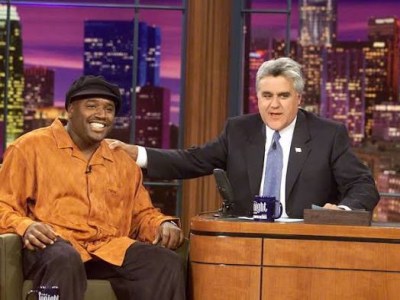
Corey Holcomb vs. Anton Daniels: The Internet Circus No One Needed
Corey Holcomb and Anton Daniels’ clash shows how poor communication fuels online chaos. Are grown men turning debates into digital drama?
Why Rappers Only Influence the Weak-Minded — and Why Modern Rap Might Be Bad for You
Rap Might Be Bad for You Let’s be real: rap used to mean something deeper. It used to be the rhythm of resilience — a voice for the voiceless, a cry from the hood to the world. But somewhere along the way, the message changed. These days, it can feel like so many rappers preach…

Young Thug and Gunna, 21 Savage ignited a broader debate about street codes
After calling for peace between Young Thug and Gunna, 21 Savage ignited a broader debate about street codes and whether rap’s old rules still matter. “Real street dudes ain’t really on the internet like that,” he said — and that one line said a lot more than people realized. It’s wild how one sentence can…
 Genweglobal
Leave a comment